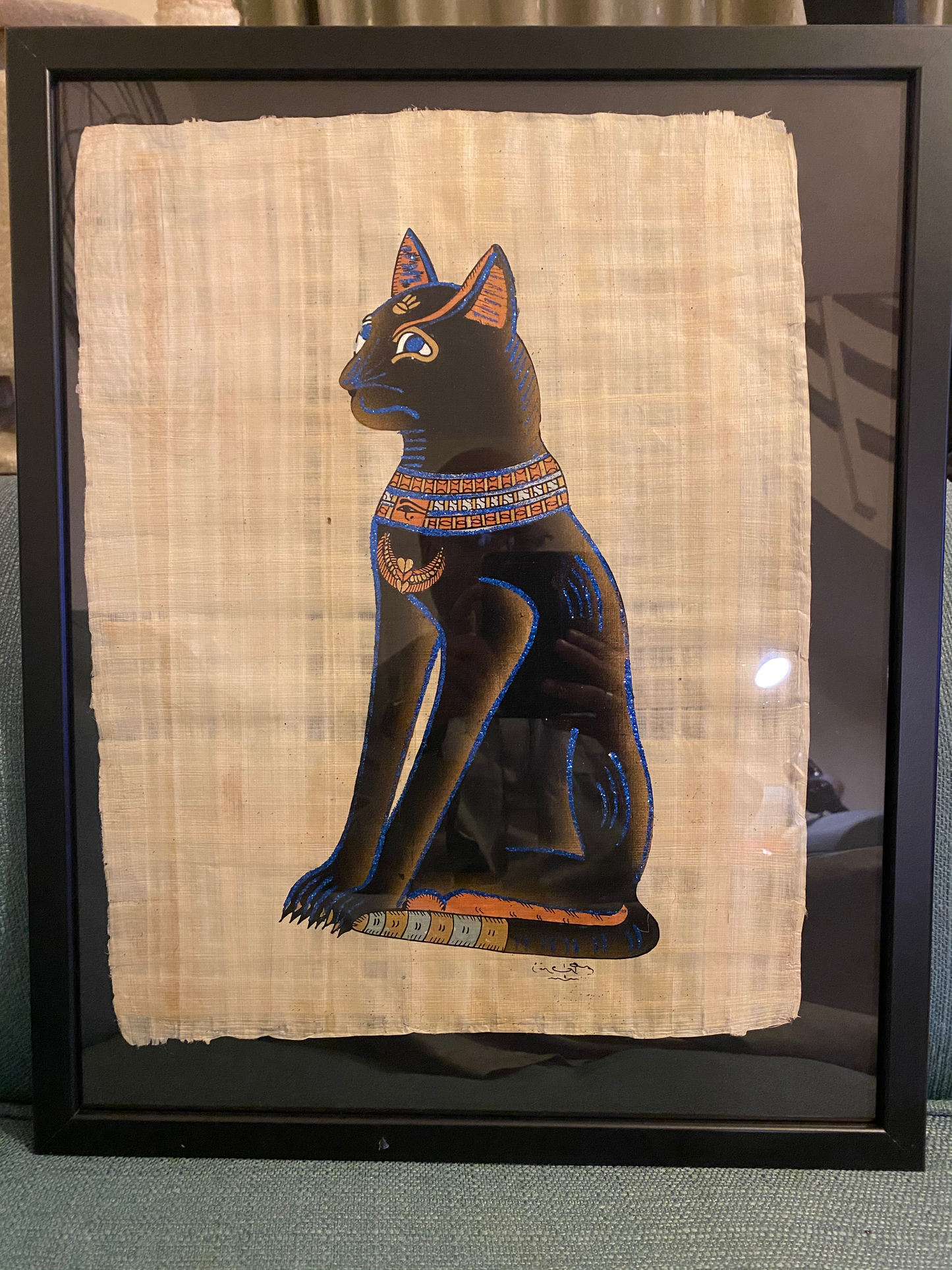
Bastet is the Egyptian goddess of the home. She is also the goddess of felines and a protector goddess. At times, Bastet may be called or referred to as “Bast”. She is often closely associated with the goddess Sekhmet, a lion goddess.
As Egyptian mythology evolved, Bastet became known more as a docile household feline goddess and Sekhmet became known as a fierce lioness and warrior goddess.
WORSHIP
In her honor, entire cemeteries of mummified house cats (often buried near their owners) appeared in Bubastis and Memphis during the Ptolemaic periods. Worshipers donated offerings of small bronze sues of the goddess. She was also honored through jewelry, especially amulets, made of gold molded into the shape of cats
FACTS ABOUT BASTET
- Women wanting children would show Bastet amulets with their desired number of offspring. She granted their wishes
- As a feline, she was sometimes depicted with ear and nose piercings. One example is the Gayer-Anderson cat statue, named after the individuals that donated it.
- Her name changed during the New Kingdom to add an extra “t,” which is more feminine.
- She was honored by worshipers with golden jewelry, as cats were associated with riches and royalty.
- Bastet was considered a good mother and had children of her own.
- She was one of the most honored deities in ancient Egypt.
- She had a yearly festival in her honor that attracted over 700,000 people from across Egypt.
- Festival activities included drinking copious amounts of wine, which is a divine drink associated with the goddess
- Bastet was sometimes portrayed wearing a necklace with a Wedjat eye, which symbolized wholeness and provided protection.
- At times she is also portrayed holding a sistrum in her right hand, which is a percussion instrument popular in ancient Egypt.
- Similarly, she is often seen holding an aegis with a lion’s head in her left hand, which is a protective shield made of armor.
- Bastet was sometimes known as the goddess of dancing and singing.
- During the annual festival dedicated to Bastet, a single torch began the celebration, followed by a torch-lighting ceremony throughout her hometown.
- She was associated with a number of other Egyptian and Greek deities.
- Bastet’s family included a sister named Hathor, a son named Maahes and possibly a second son named Nefertum.
- She was the wife of Ptah, a god of creation, rebirth, and craftsmen.
- Bastet was once worshiped for her role as a fierce protector in Lower Egypt.
- Worshiped as a feline mother-like figure in Upper Egypt.
- Worshiped mostly as a sun deity in Lower Egypt in association with her father.
REFERENCES
- Lange-Athinodorou, Eva. “The Goddess Bastet and the Cult of Feline Deities in the Nile Delta.” American Research Center in Egypt, www.arce.org/resource/goddess-bastet-and-cult-feline-deities-nile-delta. Accessed 29 Nov. 2020.